The Perfect First Attempt Is a Myth
A first attempt at a hobby can reveal where the process catches. Use a weeklong experiment to isolate one snag and choose a more useful next move.
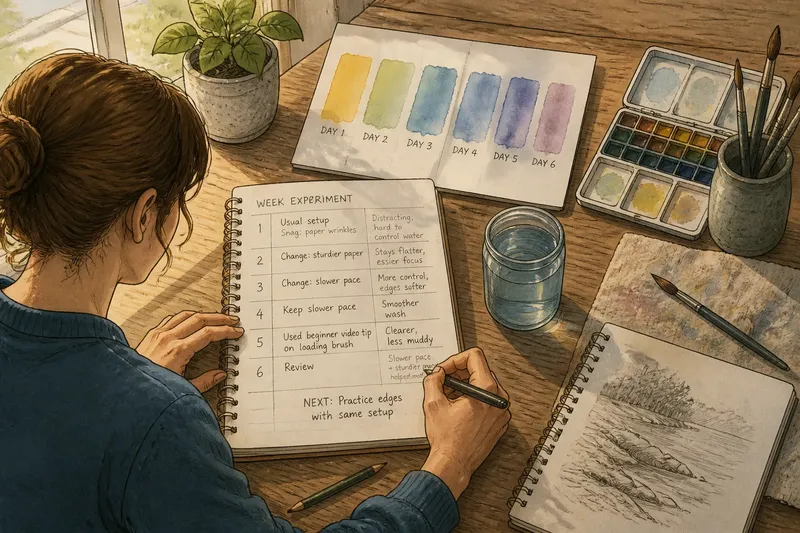
The most common mistake with a new hobby is changing the project, tools, and instructions all at once after a frustrating first try. That can cost you the chance to learn what actually caused the trouble. A first attempt at a hobby is more useful when you treat the following week as a small experiment: keep the task steady, alter one condition, and watch what changes.
The point is not to grade your talent or build a perfect streak. It is to separate the activity itself from the setup around it. A muddled drawing might come from a slippery pencil, a confusing instruction, or simple unfamiliarity; each calls for a different next move.
Choose a fixed task
Pick one repeatable task that can be done with materials already at hand. For watercolor, use the same brush and paper to paint a row of simple washes. For guitar, practice the same chord change. For knitting, work the same short row in a swatch. Keep the task modest enough that you can return to it without rebuilding your whole afternoon.
Before starting, write down the conditions that matter: the tool, surface, instructions, and pace. You do not need a formal chart. A note such as “soft pencil, smooth sketchbook page, beginner video, unhurried” gives you a reference point. Save the work or jot down where you stopped.
Choose one question to investigate. If you are learning to draw, it might be whether the pencil keeps slipping on the page. If you are practicing guitar, it might be whether a chord transition becomes clearer when you slow down. A narrow question makes it easier to distinguish a useful adjustment from a completely different attempt.
Run a one-week experiment
Use the same task across the week, but do not force a daily schedule. Return when you have a reasonable opening, and change only one condition at a time. The sequence below is a framework, not a test of discipline:
- First visit: Try the fixed task under your usual conditions. Record one observable snag, such as the pencil sliding, the chord change breaking apart, or the stitches becoming hard to count.
- Second visit: Change one condition related to that snag. For example, keep the drawing task and pencil but switch to rougher paper. Note whether the pencil stays in place more easily.
- Third visit: Restore the original condition and change a different factor, if there is another plausible cause. For a chord change, keep the instrument and fingering but slow the pace; notice whether the transition becomes easier to follow.
- Fourth visit: Keep the change that seemed most useful and repeat the task. If neither adjustment helps, choose a different question rather than stacking on more changes.
- Fifth visit: Use one source of guidance—a beginner book, a class handout, or a short instructional video—to clarify the remaining snag. Apply only one suggestion and observe what happens.
- Final visit: Compare your notes and work. Decide whether the snag has eased, whether another condition deserves a separate try, or whether the task itself holds little interest.
For each visit, note an observation and make a decision from it: if the same snag appears, test one plausible cause; if it changes, keep the useful condition for another attempt; if the activity feels dull even when the task is clear, consider trying a neighboring pastime. A missed visit does not invalidate the experiment. Resume with the same task and record the gap without trying to cram sessions together.
Change one condition
Useful variables include the tool, surface, pace, instructions, amount of assistance, or complexity of the task. Keep the other conditions as steady as you can. If you switch to a new brush, a new tutorial, and a more ambitious painting together, a smoother result will not tell you which change helped.
Say you are learning watercolor with a small brush, thin paper, and a beginner video. Your washes wrinkle the sheet, and the page distracts you. On the next visit, keep the brush, wash pattern, and video the same, but use sturdier paper. If the sheet stays flatter and you can focus on controlling the water, the surface was one obstacle; if it still wrinkles, you have learned that another factor may be involved. Either way, the next decision is clearer than it would be after replacing every supply.
Do not confuse a useful experiment with a demand for perfect control. If a condition is hard to keep steady, note the difference and treat the result cautiously. The aim is a clearer next question, not laboratory precision.
What should change next?
What if the result still looks rough?
Write down a physical detail rather than a verdict: the line wavered, the dough clung to the bowl, or the stitches tightened near the edge. If you can name a specific snag, choose one condition that might affect it; if you cannot, repeat the same task once and pay attention to where the process becomes confusing.
When should I change tools?
Change a tool when you can describe how it interferes with the task, such as paper that tears during a basic exercise or a pencil that will not make the marks you need. If the tool works well enough for the current motion, keep it and practice that motion before adding another choice.
How do I decide whether to continue?
Look beyond the finished result: did one part of the process make you curious, or did a clearer setup make the activity more appealing? If you have tried understandable tasks under manageable conditions and still feel no pull to return, it is reasonable to set the hobby aside and choose another.
What if I miss a visit?
Pick up with the same task and the next planned single change; do not try to make up the gap by combining experiments. If you keep missing visits because setup takes too long, simplify the materials or choose a version of the activity that is easier to resume.
Choose the next move
At the end of the week, compare the notes by condition, not by how polished each result looks. Did rougher paper reduce distraction? Did a slower pace make the chord change easier to understand? Did a short instruction clarify the part that had been stopping you? These observations can point toward a practical next experiment, a different task, or a clean stop.
For a first attempt at a hobby, the most useful outcome may be a sharper question rather than a better-looking result. Keep the notes that identify what helped, and let the rest of the experiment end there. If you continue, repeat the condition that made the activity easier to understand; if you stop, carry forward the knowledge of what did not fit.