Sketchbook or Loose Sheets? Pick by How You Like to Draw
Choose a sketchbook or loose sheets by how you carry, order, and revisit drawings, so your paper format supports the way you actually like to work.
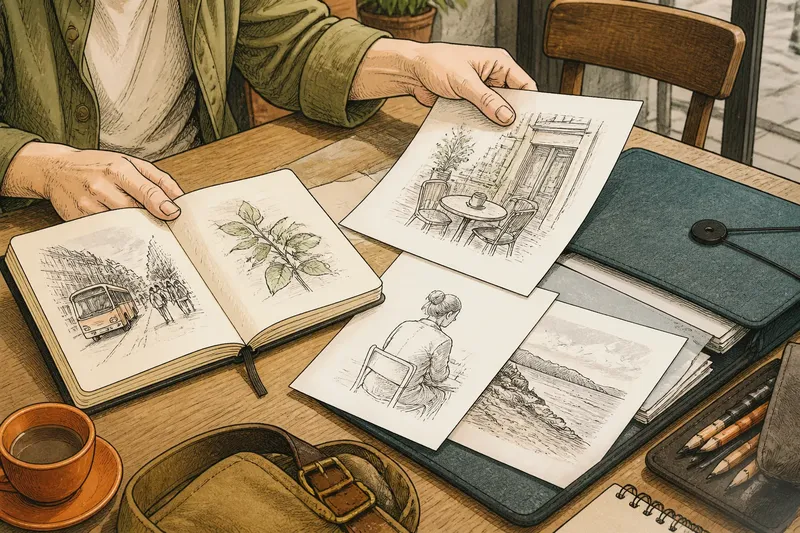
The most common mistake when choosing a sketchbook or loose sheets is buying the format that looks most appealing, then discovering it fights your drawing habits. A book can make pages awkward to turn or difficult to lay flat; loose paper can vanish into a bag, pile up without an order, or feel too precious to use. The right choice depends less on artistic ambition than on how you carry, arrange, and revisit your drawings.
Start with the moments that shape a normal drawing session. Do you sketch on a commute, at a kitchen table, or in several places across the week? Do you enjoy seeing an idea develop page by page, or do you prefer to spread drawings out and compare them? Those answers point toward a format before paper weight or cover color does.
Portability Problems
A sketchbook is a self-contained drawing surface. Its cover protects the pages, and the binding keeps them together, which makes it convenient to slip into a tote or backpack. There is no loose stack to gather before leaving the house. The tradeoff is that a book has a fixed shape: a larger page may feel cramped in a crowded seat, while a small book may not suit a drawing that needs room for broad gestures.
Loose sheets offer more choice in size and orientation. You can carry a few sheets for quick sketches or bring larger paper when you expect to work at a table. But paper needs protection. A portfolio, rigid folder, or document case can keep corners from curling and prevent charcoal or graphite from rubbing onto other surfaces. That extra container takes space, and it adds one more thing to remember.
Say you usually draw during a bus ride and have only a small shoulder bag. A pocket-sized sketchbook may be the simpler fit because its pages stay together and its cover shields them. If the same person often draws at a café table and wants room to rotate a sheet or compare several studies, a slim folder with a few loose pages could feel less restrictive.
Try carrying your usual supplies, not an idealized kit. If the folder makes you leave the paper at home, portability has become a practical problem. If the book’s fixed page feels cramped every time you open it, that is useful information too.
Page Order Friction
Bound pages create a built-in sequence. That can help when you like to see what came before: a row of gesture drawings, a series of plant studies, or one idea changing over several sessions. Flipping through a book gives the work a simple chronology without asking you to sort anything.
The same sequence can become irritating if you want to group drawings by subject or move a study beside the reference that inspired it. A bound sketchbook does not readily let you reorder pages. Some people enjoy that fixed trail; others find that an unfinished page or an experiment they dislike sits in the middle of work they want to keep together.
Loose sheets reverse the arrangement. You can group drawings by subject, medium, or current project, then change the order whenever your interests shift. That freedom comes with a small organizational job. Without a home, sheets may end up in bags, on a desk, or under other papers, making a drawing harder to find when you want to return to it.
Choose a simple holding system if you work loose: a folder for active drawings and a separate archive envelope or box for pieces you want to keep. A pencil note on the back can record a date, subject, or the question you were exploring. Avoid building an elaborate filing scheme before you know what you will actually sort by.
Freedom to Rearrange
Rearranging matters when the drawing process includes comparing, editing, or composing. Several loose sheets can sit side by side, making it easier to notice repeated shapes or try different arrangements. You can also remove a sheet from your working group without taking it out of a bound sequence.
A sketchbook has a different kind of freedom: everything is ready to turn, with no separate stack to arrange. If your pleasure comes from drawing one page after another and letting the sequence remain as it happened, the binding supports that habit. The pages may become a record of attention rather than a carefully curated portfolio.
There are middle options. A wire-bound pad often opens flatter than a tightly bound book, although the wire can catch on a bag or make the edge less comfortable against your hand. A refillable binder lets you add and move pages, but its mechanism and cover add bulk. A perforated pad makes removal straightforward, though a torn-out page may not retain the same clean edge as a sheet made for separate work.
Paper also affects the decision. If you use wet media, check that the paper suits the materials and that the binding tolerates the way you work; a page that buckles can make a book harder to close neatly. For dry media such as pencil or colored pencil, the surface texture and ease of turning may matter more. Follow the paper maker’s and product maker’s guidance for materials and handling.
Common Format Snags
When a sketchbook is hard to use, identify the specific point of resistance before replacing it.
- The book will not stay open. A tight binding may lift the pages near the center. Try drawing closer to the outer edge, choosing a lay-flat binding next time, or using loose paper when a broad, uninterrupted surface matters.
- The page feels too small. Notice whether you need more room for the whole subject or simply prefer larger marks. A larger book may solve the first problem; loose sheets let you select different sizes without committing every page to one format.
- Blank pages feel difficult to begin. A pristine bound page can make a quick experiment feel consequential. Try a book with toned or recycled paper, or use loose sheets reserved for casual studies rather than keeping all paper in one precious stack.
- Loose drawings become hard to locate. The format is not necessarily the problem; the missing piece may be a consistent place for finished and unfinished sheets. Give each group a folder or envelope and label it in plain language.
- Paper edges get damaged in transit. A sketchbook cover may offer enough protection for everyday carrying. For loose sheets, use a folder with a firm backing and avoid overfilling it, which can bend corners or press marks into the drawings.
Change the part causing friction, not every part of your drawing setup at once.
Questions About Format?
Is a sketchbook better for drawing outdoors?
It can be convenient when you want pages protected and together, especially if you draw while standing or moving between spots. Loose sheets can work well at a stable table, where a folder and a firm surface are easy to manage.
Can I mix a sketchbook with loose paper?
Yes. You might keep the book for quick observations and use separate sheets for studies that need more room or side-by-side comparison. A shared folder or shelf can keep the two formats easy to find without forcing them into one sequence.
Which format suits drawing classes?
Consider how the class handles exercises and review. A sketchbook keeps work in sequence for later reference, while loose sheets make it easier to pin up, sort, or hand over individual drawings; a folder can keep them together between sessions.
What if I like both formats?
Use each for a different job rather than demanding that one format solve every problem. For example, keep a small book for casual, portable sketches and reserve loose sheets for drawings you want to rearrange or work on at a larger scale.
Choose by Habit
Before buying, imagine an ordinary drawing session from the moment you pick up your supplies to the moment you put them away. If the appealing part is opening a protected book and moving through a sequence, a sketchbook is likely to fit. If you want to select the size, position, and order of each sheet, loose paper may be more comfortable.
For a useful trial, set aside a few pages in an inexpensive sketchbook and a small stack of loose paper. Use each during the kind of session where you expect it to work best: the book on the go, the loose sheets at a table. Pay attention to observable annoyances—pages lifting, sheets slipping, awkward size, or trouble finding a drawing—not to which stack looks more polished.
Keep the format that makes it easier to begin and return to your drawings. If the sketchbook or loose sheets choice still feels close, let the next drawing decide: choose the surface you can reach without rearranging your day.